


Sand Drop
3.829.00 Reviews
App Specs
- Version
- 0.4.1
- Updated On
- License
- Free
- Downloads
- 10,000+
- Developer
- Fingers Yoda
- Categories
- Puzzle
- Platform
- Android
Screenshots
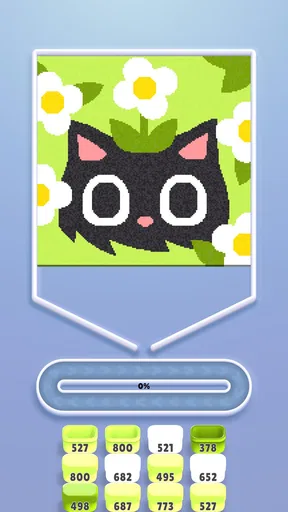
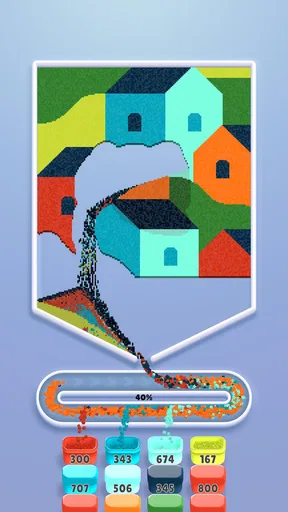
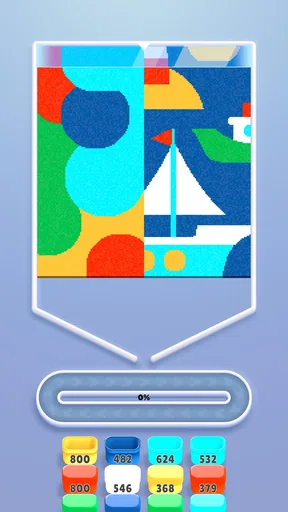
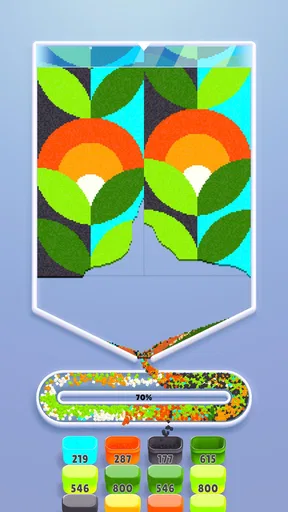
 Analysis by AppCompare
Sand Drop is a small puzzle game built around a simple promise: relax, swipe, and guide colorful sand toward a solution. I found it easy to understand at first glance, but not so shallow that every board feels automatic. The appeal is in making a few deliberate movements, watching the sand react, and correcting a plan when the pieces do not travel exactly as expected. It is a good fit for short breaks, especially if you want something calmer than a timed match game.
Developed by Fingers Yoda, this free puzzle title is aimed at Everyone and runs on Android devices using version 7.0 or later. Its current version is 0.4.1, and the game has passed the early discovery stage with over ten thousand installs. The average sits at 3.8 from around eighty ratings, which feels consistent with my impression: the central idea is pleasant and accessible, although players looking for a deep campaign or a large collection of advanced systems may find it limited.
What to expect when you begin
The first thing to understand is that Sand Drop is not trying to be a traditional logic game with written clues, numbered grids, or complicated rules. The board communicates through color, movement, and space. You swipe to influence the sand, observe how it falls or spreads, and work toward a visually clear result. That makes the opening minutes reassuring because you can learn by doing rather than studying instructions.
I would describe the game as a tactile puzzle experience rather than a fast reflex challenge. Your first instinct may be to swipe repeatedly and hope the sand reaches the right place, but the better approach is to pause between actions. The board often rewards noticing where the sand will collect, which route is open, and whether a movement now will make the next movement harder. That small change in attitude turns the game from casual tapping into a more thoughtful routine.
The colorful presentation also gives the game much of its personality. Color is not merely decoration; it helps separate the elements you are trying to follow. For a first-time player, this is useful because the screen can otherwise become visually busy once several areas are active. I recommend looking at the entire board before swiping, rather than focusing only on the nearest pile. A solution often depends on a destination or blockage farther away.
The free download makes it easy to try without committing money first. There are in-app purchases ranging from $0.99 to $99.99 per item, so I would advise checking the purchase prompts carefully and deciding in advance whether you want to spend anything. The core reason to install is the puzzle loop itself, not the expectation of a large competitive ecosystem or a social feature set.
The right mindset for the first few boards
My most useful beginner tip is to treat every swipe as information. If the sand moves in an unexpected direction, do not immediately repeat the same gesture with more force or speed. Instead, ask what the board revealed: did the sand follow gravity, fill a gap, split around an obstacle, or stop at a boundary? Learning that visual language is more valuable than trying to finish the first challenge as quickly as possible.
Worth Reading Before You Choose

EA SPORTS FC Mobile 26 Is a Bigger Football Game, but It Takes Time

Flipboard Shows What News Apps Must Do Beyond the Feed

Switching to Android Auto Means Rethinking Your Driving Routine

Google Calendar Makes a Crowded Week Easier to Manage

Ludo King Makes the Most of the Minutes Between Plans

Baby Panda World Brings Quick Play to Modern Phones, but Its Game Library Feels Busy
This also makes the game suitable for people who usually avoid demanding puzzle titles. You do not need to memorize a complicated control scheme. The challenge comes from reading the arrangement and choosing a better order of actions. At the same time, players who want instant stimulation may find the deliberate pace too quiet. If your preferred puzzle games are built around countdowns, streaks, or constant rewards, this will probably feel restrained.
Getting from installation to a first meaningful success
After installing the game, I suggest starting with the sound and visual environment at a comfortable level rather than rushing straight into repeated swipes. A calm puzzle works best when you can see the whole board clearly. Hold the phone steadily, use one finger for controlled gestures, and give each movement a moment to finish before deciding what to do next. That simple habit prevents many false mistakes.
On the first board, identify three things before acting: where the sand begins, where it appears to need to go, and what might interrupt its path. You do not need to solve the entire layout mentally. Just choose the next safe movement. This is a better workflow than planning a long chain immediately because the board’s response may change what seems sensible afterward.
For a first successful action, make a short swipe toward the open area that appears to offer the clearest route. Watch the sand rather than lifting your attention to another part of the screen. When it settles, check whether the movement created a useful channel or filled a space that was blocking the next step. The important success here is not simply completing a board; it is recognizing why one movement helped.
That distinction matters because Sand Drop can feel random if you play too quickly. In my experience, the game becomes more satisfying when I use a rhythm of observe, swipe, wait, and reassess. The waiting step is easy to ignore, but it lets the visual result become readable. If the sand is still moving, another gesture can make the board harder to interpret and may push you away from the clean solution you were building.
A practical routine for avoiding early restarts
When a board starts to go wrong, first look for a recovery path instead of restarting immediately. A misplaced swipe does not always ruin the position. Sometimes the sand can be redirected by opening a nearby route or using the space that remains. This is one of the more enjoyable trade-offs in the game: a mistake can become a new puzzle rather than a simple failure screen.
If recovery is clearly impossible, remember what the failed attempt taught you. Was the problem caused by moving the closest sand first? Did you close a passage before the rest of the board had been handled? Did you assume that a visual gap was open when it was actually blocked? These questions turn a restart into a useful second attempt. I found this especially helpful on a short break, when I wanted a small sense of progress without beginning a lengthy session.
Another concrete tip is to work from the destination backward. Look at the area where the sand needs to finish and imagine what must remain open for it to arrive there. Then choose a swipe that protects that route. This is more reliable than always starting with the largest visible pile. The biggest object on the screen is not necessarily the most urgent part of the solution.
For younger players, the Everyone rating and straightforward controls make the game approachable, but an adult may still need to explain the idea of waiting and planning. For older puzzle fans, the attraction is less about discovering a complex rule set and more about refining how carefully they read each layout. I would not install it expecting a story-driven adventure. I would install it for compact, visual problem-solving.
Where new players may become confused
The main source of confusion is the difference between a swipe that looks correct and a swipe that leaves enough room for later actions. Because the game presents the sand as something that moves naturally, it is tempting to think only about its immediate direction. The better question is what the board will look like after the movement finishes. A locally good move can create a globally awkward position.
Color can also lead to rushed decisions. When several bright areas are visible, I sometimes found myself following the most noticeable one rather than the one that mattered to the solution. Slow down and identify the intended relationship between the colors. If two areas appear connected by the goal of the board, protect that connection before making decorative or convenient movements elsewhere.
Another point worth knowing is that a swipe is not the same as a guaranteed command to place every grain exactly where you want. The sand’s behavior is part of the puzzle. Your control is about shaping the route and conditions, not manually positioning each piece. Players who expect direct drag-and-drop precision may initially think the game is unresponsive, when the real lesson is to create a better path and let the material settle.
When the board seems stuck, inspect the edges and corners before assuming the level is broken. These areas can determine whether the sand has somewhere to collect or whether a passage remains usable. I also recommend checking the full screen after each major movement; focusing on one corner can hide a change elsewhere that affects your next decision.
The purchase model is another practical consideration. Since the game is free to download but includes individual purchases from $0.99 up to $99.99, I would be cautious with a child’s device or a shared family phone. The safest approach is to treat any purchase prompt as optional and avoid tapping through automatically. If you only want to sample the puzzle concept, you can do so without making the payment system part of your routine.
How it compares with familiar puzzle alternatives
Compared with match-style puzzle games, Sand Drop feels less dependent on quick pattern recognition and more dependent on spatial planning. You are not mainly hunting for a chain of identical symbols before a timer expires. That makes it calmer, but it also means the reward arrives more slowly. Someone who enjoys rapid combinations may prefer a match game, while someone who likes watching a plan unfold may find this more comfortable.
Compared with physics puzzles, it has a similarly hands-on quality, but the colorful sand gives the experience a softer, more relaxing identity. A physics-focused alternative may offer more objects, mechanisms, or elaborate experiments. Sand Drop is more appealing when you want the board to stay readable and the interaction to remain focused on movement and arrangement rather than a large toolbox.
It also differs from classic Sudoku or crossword apps. Those alternatives test deduction through fixed information, clues, and written answers. Here, the reasoning is visual and immediate. You can often see the consequence of a swipe right away, which makes it easier to learn through experimentation. On the other hand, if you want a puzzle that can be solved away from the screen in your head, a traditional number or word game may suit you better.
The modest rating suggests that the game will not satisfy every type of puzzle player, and I think that is fair. Its strength is its narrow focus. Its weakness is the same thing: anyone seeking a broad progression system, extensive narrative, or highly varied challenge structure may run out of reasons to continue sooner than expected. I would choose it for a quiet, visual diversion, not as my only puzzle game.
Who will enjoy it and who should skip it
Sand Drop is a good choice for a first-time puzzle player who wants controls that can be understood quickly. It is also useful for people who prefer short sessions. Imagine waiting for a bus or taking a few minutes between tasks: you can open the game, study one board, make a handful of careful movements, and stop without needing to remember a complicated story or team objective.
I can also see it working well as a shared game between an adult and a child. One person can suggest where to create a route while the other performs the swipe, turning a single board into a small conversation about cause and effect. The Everyone rating supports that broad accessibility, although purchase controls still deserve attention on shared devices.
Players who should skip it are those who need constant novelty, competitive rankings, or a strong sense of long-term progression. The store summary emphasizes relaxing sand puzzles, and that is a useful expectation to keep. This is not the best option if your definition of a puzzle game requires intense pressure or a large collection of distinct genres inside one app.
I would also hesitate to recommend it to someone who dislikes indirect controls. The sand does not behave like a rigid object that always follows a precise finger path. Its movement is part of the challenge, and patience is required. If that sounds frustrating rather than interesting, a tile-swapping game with immediate, predictable actions would probably be a better match.
What I would do after the first success
Once you complete an early board, do not immediately increase your speed. Instead, replay the mental process that worked. Identify which area you protected, which route you opened, and which movement you deliberately postponed. This creates a repeatable method that is more useful than memorizing a single solution. The game is at its best when each board teaches you to read the next one more carefully.
A good next step is to experiment with order. On one attempt, handle the most obvious route first; on another, prepare the destination before moving the starting sand. Compare how much space remains after each choice. This is a low-pressure way to find the game’s deeper layer without inventing difficulty that the board does not require.
If you are playing during a busy day, set a simple stopping point: finish one board or stop after one thoughtful attempt. That keeps the relaxing quality intact. Repeating a failed layout while annoyed can make the controls feel worse than they are. Returning later with a clear view is often more productive, especially because the game’s challenges depend on noticing relationships across the whole screen.
Keep the version in mind as well: the current release is 0.4.1, so the experience may continue to change as Fingers Yoda develops it. I would judge the game on what it offers now rather than on promises about future additions. At present, the strongest reason to try it is the combination of simple swipes, colorful feedback, and compact visual reasoning.
My final recommendation is straightforward. Try Sand Drop if you want a free, approachable puzzle game that gives you room to think and does not demand frantic tapping. Start slowly, watch how the sand settles, and plan around the destination rather than the most obvious pile. I would not make it my first choice for competitive or content-heavy puzzle play, but for a calm break and a few satisfying problem-solving moments, Sand Drop has a clear place on my phone. The best part is that its first meaningful success comes from understanding the board, not from mastering a complicated tutorial.
Pros
- Simple drag-and-drop controls are easy for players of all ages.
- Short levels make it suitable for quick play sessions.
- Relaxing visuals and effects create a pleasant casual experience.
- Progressive challenges help keep the gameplay engaging.
- Usually playable offline
- making it convenient while traveling.
Cons
- Gameplay can feel repetitive after extended sessions.
- Later levels may become frustrating without precise timing.
- Limited variety may reduce long-term replay value.
- Ads can interrupt play
- depending on the version installed.
- Some devices may experience occasional performance issues.
FAQs for Sand Drop
What is Sand Drop and how does the game work?
Sand Drop is a casual puzzle game built around guiding falling sand into the correct areas while avoiding obstacles and managing limited space. Each level introduces a different layout or challenge, so success depends on timing, observation, and planning rather than simply tapping quickly. The controls are easy to understand, making it suitable for short sessions and relaxed gameplay.
Is Sand Drop free to download and play?
Sand Drop can generally be downloaded and played without an upfront purchase, but the exact free content may depend on the version available for your Android or iOS device. Like many casual games, it may include advertisements, optional in-app purchases, or both. Before downloading, check the store listing for current pricing, supported devices, and any purchase details.
Does Sand Drop require an internet connection?
The basic levels of Sand Drop may be playable without a constant internet connection, which is useful when traveling or when mobile data is unavailable. However, advertisements, updates, cloud features, analytics, or certain online services may require connectivity. For the most reliable experience, open the game once while connected and review its current offline behavior on your device.
Is Sand Drop suitable for children and casual players?
Sand Drop is designed around simple controls and visual puzzle-solving, so it can be approachable for casual players and older children. Nevertheless, parents should review the game’s age rating, advertising, privacy information, and optional purchases before allowing younger users to play. Difficulty can increase across levels, but the gameplay is generally easy to learn without lengthy tutorials.
What should I check before installing Sand Drop?
Before installing Sand Drop, confirm that your phone or tablet meets the required operating-system version and has enough free storage for the game and future updates. You should also check the developer name, recent user reviews, permissions, advertising policy, and in-app purchase information in the official store. Downloading from Google Play or the Apple App Store is the safest option.


